Position:
Home > FAQ
FAQS
We have our own brand, and the products has passed the ISO9001 quality system and CE certification, and all the equipmentfittings are famous brand in China.
Precautions for vibrating screen for chestnut screening
Equipment operation:
Pre-start inspection: Make sure that all parts of the vibrating screen are intact, such as the screen, motor, transmission device, etc. Check and clean the feed port to ensure that there is no blockage.
Start and stop: Start and stop the vibrating screen correctly according to the operating instructions of the equipment. Follow normal operating procedures and safety regulations to prevent accidents.
Feed control: Control the feeding speed and amount of chestnuts as needed to ensure the stability of screening effect and output.
Observation and adjustment: Regularly observe the working status of the vibrating screen, and if any abnormality is found, adjust or repair it in time.
Equipment maintenance:
Cleaning and maintenance: Regularly clean all parts of the vibrating screen, especially the screen and feed port. When cleaning, use appropriate tools and cleaning agents to avoid damage to the equipment.
Lubrication and inspection: Regularly add an appropriate amount of lubricant to the transmission device of the equipment, and check the tightness of the transmission parts. If looseness or wear is found, repair or replace it in time.
Screen maintenance: Check the wear of the screen. If necessary, replace the severely worn screen in time to ensure the stability of screening effect and output.
Troubleshooting: If the vibrating screen fails or has abnormal conditions, stop the machine in time to check and troubleshoot. If necessary, seek help from the equipment supplier or professional maintenance personnel.
Through correct operation and regular maintenance, the service life of the equipment can be improved, and stable screening effect and product quality can be obtained.
How is liquid quickly filtered in cheese processing?

A customer brought his cheese materials to us, hoping we could help him find a vibrating screen for quickly filtering the liquid from the cheese.

We chose to test a circular rotary vibrating screen and a square linear vibrating screen. Let's see the results!

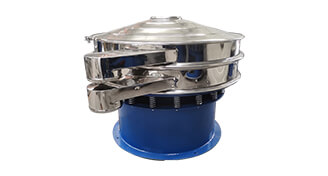
First, the rotary vibrating screen. It's specifically designed for filtering fine powdery materials.

Then we tested the linear vibrating screen. It features a quick-disassembly design, making screen replacement easier, and the cheese solids move forward during filtration, proceeding to the next processing step.

Finally, which screening machine do you think the customer would choose?

The answer is the linear vibrating screen!

See the introduction for details.
Why must an ultrasonic system be used to screen 220 mesh oatmeal powder?
Is an ultrasonic vibrating screen necessary for screening oatmeal powder, especially when it's 220 mesh? The answer is definitely yes. There are three key reasons for this. Firstly, 220-mesh oatmeal powder is extremely fine and tends to clump together during screening. These clumps can block the screen, reducing efficiency. An ultrasonic vibrating sieve uses high-frequency waves to keep the powder loose, preventing clumps and blockages. Secondly, these screens are designed for fine materials. Xinxiang Dayong Vibration Equipment Co., Ltd.'s ultrasonic vibro screens, with their advanced technology, excel at screening fine powders like 220-mesh oatmeal, ensuring efficient and accurate results. Thus, an ultrasonic system is crucial for this task.
Can the rotary vibrating screen be changed to my local voltage?
YES
Usually the common voltages in China are 380V, 50HZ, three-phase electricity and 220V, 50HZ, single-phase electricity.
If your local voltage is different from that in China, you can communicate with the sales staff in time before production starts.
We will provide a reasonable solution based on the characteristics of the product and your local voltage.
Here are some common voltages for reference only:
380V, 50HZ, three-phase
220V, 50HZ, single phase
220V, 60HZ, single phase
415V, 50HZ, three-phase
Can the rotary vibrating sieve sieve wet rice?
Yes, the vibrating screen can be used to screen wet rice. The vibrating screen is a commonly used screening equipment that can separate and screen materials according to different particle sizes through the action of vibration and screen. For materials such as wet rice, the vibrating screen can effectively classify the particles according to size, so that the wet rice can be screened into particles of different particle sizes.

When screening wet rice, the appropriate screen structure and aperture are usually selected to ensure that the wet rice passes through the screen smoothly. In addition, the vibrating screen also has the function of adjusting the vibration amplitude and frequency, which can be adjusted according to the characteristics of wet rice to achieve the best screening effect.

Therefore, the vibrating screen is a reliable equipment suitable for screening wet rice, which can help achieve the screening and grading requirements of wet rice.
tensioning procedure for the vibrating screen's belts will depend on the specific model of the screen and the type of belts being used
The manufacturer's recommended tensioning procedure for the vibrating screen's belts will depend on the specific model of the screen and the type of belts being used. However, here are some general guidelines for tensioning the belts:

1. First, ensure that the screen is turned off and disconnected from the power source.

2. Locate the belt tensioner, which is typically a spring-loaded pulley located near the motor.

3. Use a tension gauge or other appropriate tool to measure the tension of the belts.

4. Adjust the tensioner as needed to achieve the manufacturer's recommended tension. This may involve adjusting the tensioner bolt or moving the tensioner pulley to increase or decrease tension.

5. Check the tension of the belts again after making adjustments to ensure that they are within the recommended range.

6. Once the proper tension has been achieved, tighten the tensioner bolts or lock nuts to secure the tensioner in place.

7. Verify that the screen is operating smoothly and efficiently before resuming use.

It's important to note that these are general guidelines, and the specific tensioning procedure may vary depending on the model of the vibrating screen and the manufacturer's recommendations. Always refer to the user manual or contact the manufacturer for specific instructions and recommendations.
The manufacturer's recommended tensioning procedure for the vibrating screen's belts will depend on the specific model of the screen and the type of belts being used. However, here are some general guidelines for tensioning the belts:

1. First, ensure that the screen is turned off and disconnected from the power source.

2. Locate the belt tensioner, which is typically a spring-loaded pulley located near the motor.

3. Use a tension gauge or other appropriate tool to measure the tension of the belts.

4. Adjust the tensioner as needed to achieve the manufacturer's recommended tension. This may involve adjusting the tensioner bolt or moving the tensioner pulley to increase or decrease tension.

5. Check the tension of the belts again after making adjustments to ensure that they are within the recommended range.

6. Once the proper tension has been achieved, tighten the tensioner bolts or lock nuts to secure the tensioner in place.

7. Verify that the screen is operating smoothly and efficiently before resuming use.

It's important to note that these are general guidelines, and the specific tensioning procedure may vary depending on the model of the vibrating screen and the manufacturer's recommendations. Always refer to the user manual or contact the manufacturer for specific instructions and recommendations.
 1 2 3 4 5 6 7 8 9 10 
welconme
your inquiry
Copyright © Xinxiang Dayong Vibration Equipment Co., LTD.
Technical Support: COVERWEB